Our Mission
The mission of the GOG Foundation is to transform patient-centered gynecologic cancer care through innovation, research and education.

Our Vision
The vision of the GOG Foundation is to be the premier collaborative network for transformative research in gynecologic malignancies.


Latest Episodes

The GOG Highlight Reel - January 2026

The GOG Foundation, Inc. and GOG Partners are thrilled to present the “The GOG Highlight Reel”, an ongoing Education Series that showcases clinical trials and other newsworthy education, from major medical meetings throughout the year.  The GOG Highlight Reel distills practice-changing information disclosed during recent major medical meetings into a two-and-a-half-hour segment. This comprehensive course examines recent clinical trial data in gynecologic malignancies, offering insights on data presentations, ongoing research, and drug approvals shaping the field. It addresses common gynecologic malignancies, aiding physicians in comprehending the evolving treatment landscape, including understanding trials in progress. Participants will receive a synthesis of recent studies and explore key components of clinical trials, gaining essential knowledge for research in these malignancies. Dynamic discussions will focus on emerging approved therapies and investigational agents, with an intent to provide insights into current (as well as future) advancements. Join us for a journey through clinical trials in ovarian, endometrial and cervical cancers, gaining the skills to navigate the latest oncology research and clinical care confidently.The GOG Foundation, Inc. is grateful for our commercial supporters for Independent Medical Education Support associated with this Symposium: GSK, Merck, AbbVie, AstraZeneca, Corcept Therapeutics, Verastem, Eisai, Natera, Karyopharm Therapeutics, BioNTechThe GOG Foundation, Inc. would also like to thank our sponsors for this symposium: Gilead, Faeth Therapeutics

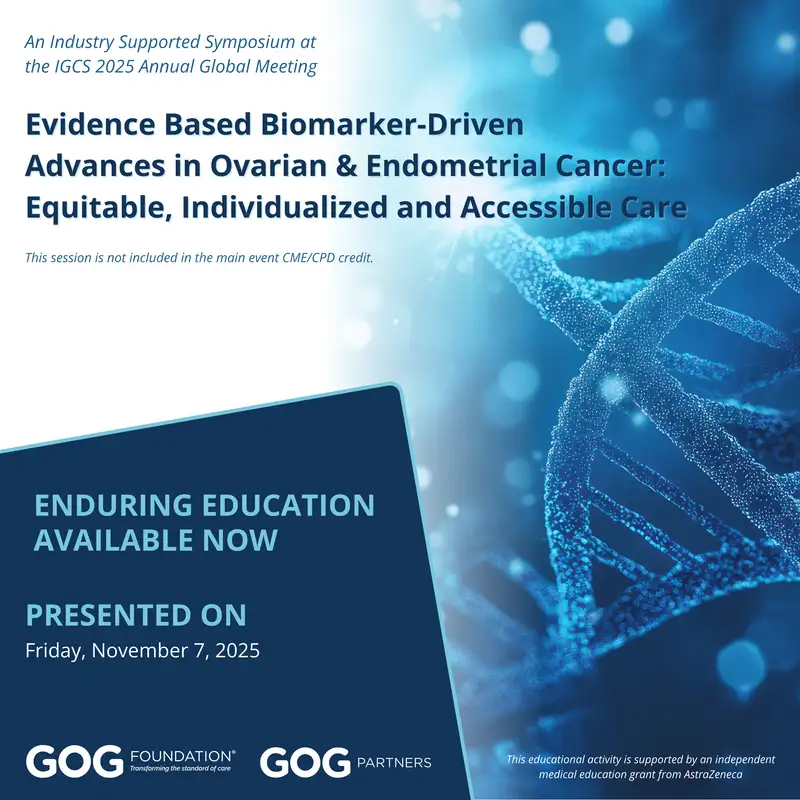
Evidence Based Biomarker-Driven Advances in Ovarian & Endometrial Cancer: Equitable, Individualized and Accessible Care

This course offers a clinically relevant exploration of evolving treatment strategies in ovarian and endometrial cancers for a global audience.  The primary focus of this course will help learners understand how to make biomarker-driven decisions for on-label therapeutic pathways. Learners will deepen their understanding of the role of BRCA, HRD, MMR/MSI, and emerging biomarkers such as p53 for equitable and individualized care treatment plans that aim to improve patient outcomes. Through cased-based learning, the program emphasizes the real-world application of molecular testing, including how to interpret biomarker results and integrate them into treatment.  Key trials such as SOLO-1, PAOLA-1, PRIMA, DUO-E and ARIEL3 will be discussed to illustrate evidence-based approaches to selecting the right therapy for the right patient, particularly in the context of PARP inhibitor use and HRD testing as well as target based ADCs.  The course acknowledges geographic disparities, particularly in areas with limited on-the-ground support and aims to provide practical guidance for clinicians who are working to implement testing and treatment strategies under local constraints.  Additionally, the program will explore emerging therapeutic targets and biomarkers, including the potential of antibody-drug conjugates (ADCs), Her2 and Folate Receptor Alpha, and discuss how evolving science is reshaping treatment landscapes. Consideration will be given to health equity, access to testing, and the implementation challenges faced by clinicians and patients across diverse care environments. All content will be aligned with current regulatory guidelines and appropriate for independent medical education (IME), with a clear distinction between on-label use and emerging data requiring further validation.

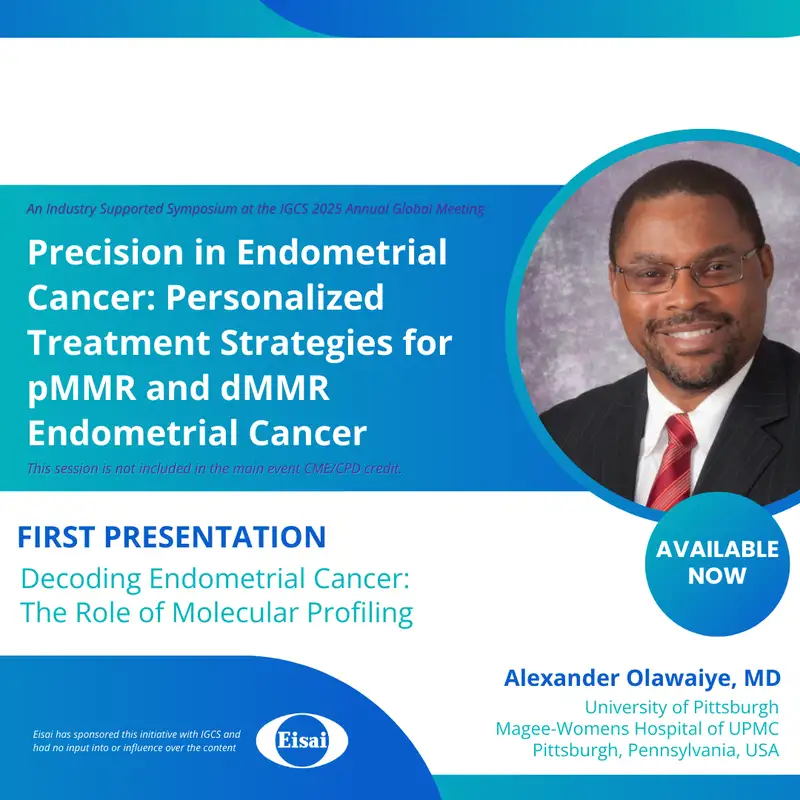
Precision in Endometrial Cancer: Personalized Treatment Strategies for pMMR and dMMR Endometrial Cancer First Installment

This interactive 90-minute symposium will explore the evolving treatment landscape in endometrial cancer, focusing on the distinctions between dMMR and pMMR disease. Faculty will provide expert insights on current treatment paradigms, including immunotherapy, chemotherapy, and novel combinations. Through integrated patient case discussions, the session will highlight how molecular profiling drives treatment selection, the importance of toxicity management, and strategies for sequencing therapies across patient subtypes. The session will conclude with forward-looking perspectives on addressing data gaps and improving outcomes.

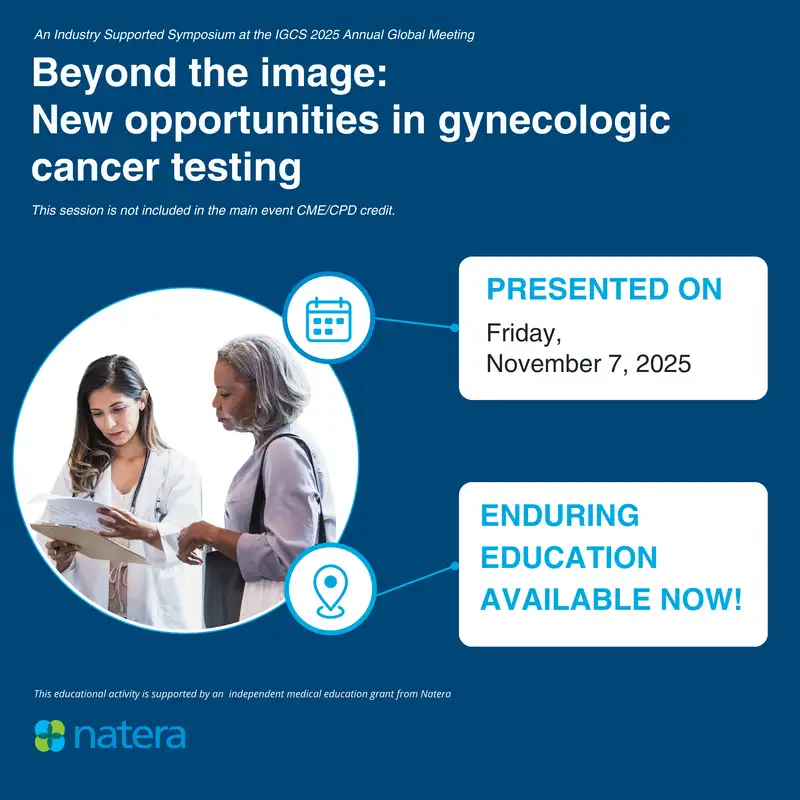
Beyond the Image: New Opportunities in Gynecologic Cancer Testing

Minimal Residual Disease (MRD) testing using circulating tumor DNA (ctDNA) has emerged as a promising tool for improving the management of gynecologic malignancies, including endometrial, ovarian, and cervical cancers. This 90-minute course explores the evolving role of ctDNA in identifying disease recurrence and assessing treatment response—potentially earlier than imaging or traditional biomarkers. Participants will receive an in-depth overview of the biological basis of ctDNA detection, the current clinical evidence supporting its utility, and its integration into clinical workflows. Case-based discussions will illustrate real-world applications, showcasing how ctDNA can optimize decisions on surveillance and therapeutic strategy. The program will also critically assess limitations and challenges of ctDNA-based MRD testing, including issues with sensitivity, false positives, access, and cost. In alignment with a fair and balanced approach, the course will also explore other MRD detection modalities such as radiologic imaging, CA-125, and histopathology, highlighting comparative strengths and contexts for use. The program engages clinicians to learn how to interpret ctDNA MRD data and apply it effectively within a multidisciplinary care framework.